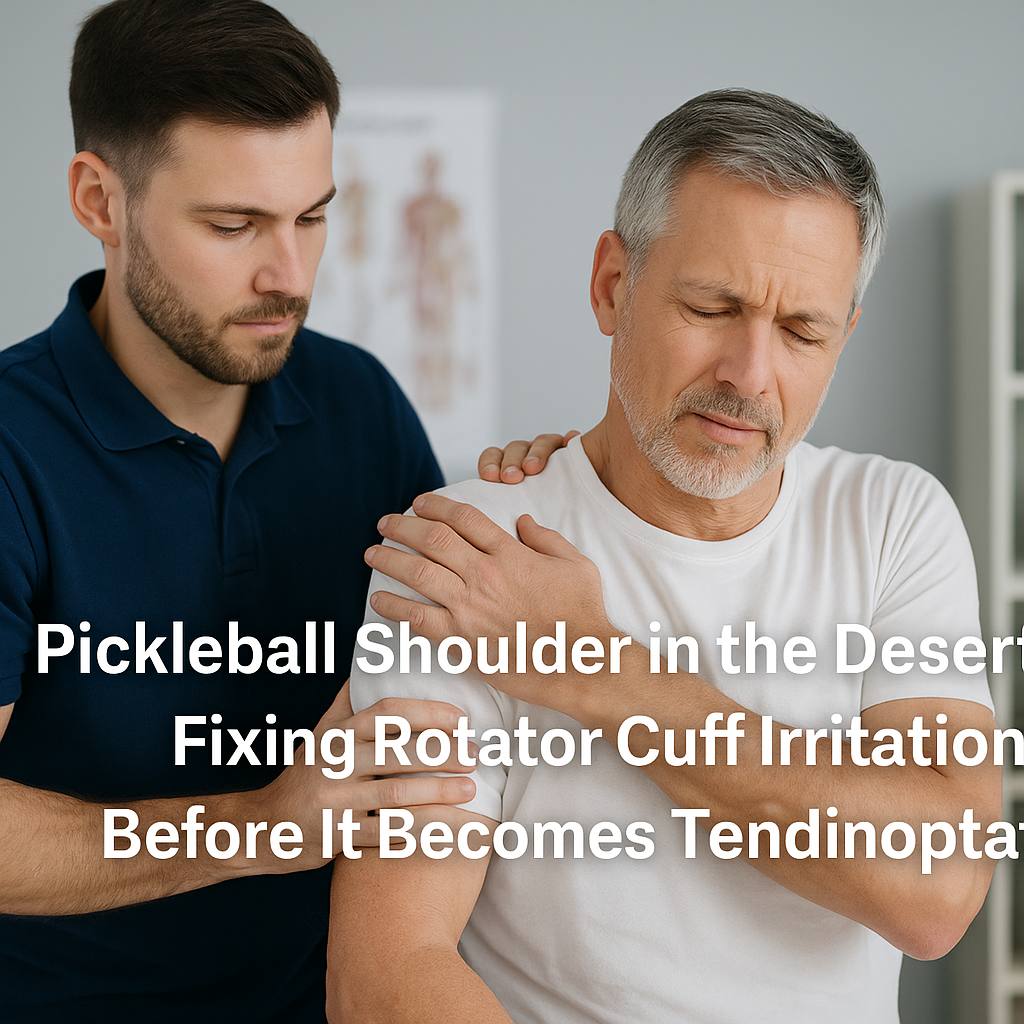
Pickleball Shoulder in the Desert: Fixing Rotator Cuff Irritation Before It Becomes Tendinopathy
If you’ve spent any amount of time in La Quinta over the past few years, you’ve probably noticed something: pickleball isn’t just a sport here anymore — it’s a movement. From the courts at Fritz Burns Park to resort clubs tucked between palm-lined fairways, the pop of the paddle and the bounce of the ball have become as much a soundtrack to our mornings as the hum of sprinklers on the green.
But with this boom comes a quieter trend I’ve seen at Rodriguez Chiropractic: more and more players — from casual weekend duos to competitive league regulars — walking in with nagging shoulder pain that started as “just a twinge” and turned into something harder to ignore. Often, that twinge is a rotator cuff irritation that, if left unchecked, can slide into a much tougher road — tendinopathy.
Why Pickleball Shoulder Is a Desert Thing
The desert climate adds its own twist to shoulder injuries. Playing under La Quinta’s year-round sun means less seasonal downtime. That’s great for skill-building, but it also means less natural rest for your shoulder’s soft tissues. Unlike seasonal sports where you get a few months off, pickleball here is practically a 365-day habit.
Throw in the fact that many players in the valley are in their 40s, 50s, and beyond — an age range where tendon recovery naturally slows — and you’ve got the perfect storm for overuse injuries.
What’s Really Happening in Your Shoulder
Your rotator cuff is a team of four muscles and tendons that keep your shoulder joint stable and let you do all that overhead serving and quick volleying. When the cuff is irritated, tiny microtears and inflammation set in. At first, you might feel stiffness in the morning or a little soreness after a long game. But if you keep pushing through — especially in back-to-back desert tournaments — the tendon can degenerate into tendinopathy, which is harder (and slower) to fix.
How to Spot It Early
In my practice, I’ve found that early recognition is the biggest factor in avoiding long-term issues. Here are some early warning signs for La Quinta pickleball players:
- Post-game soreness that lasts into the next day
If you’re still tender the following morning, that’s your body waving a caution flag. - Pain when reaching overhead or behind you
Serving, smashing, or even grabbing your paddle from the back seat can cause discomfort. - Nighttime shoulder aches
Many patients say it wakes them up when they roll onto the affected side.
If you notice these signs, don’t write them off as “just getting older” — especially if you’re committed to regular play.
Prevention: Where Desert Pickleballers Can Win
Here’s where local knowledge matters. The desert’s dry air means you dehydrate faster, which can affect muscle and tendon health. Staying hydrated before, during, and after matches helps keep soft tissue pliable and reduces inflammation risk.
I also recommend:
- Dynamic warm-ups before you hit the court
Instead of static stretching, do arm circles, band pull-aparts, and light resistance rows to get blood flowing. - Load management
Mix high-intensity play days with lighter practice sessions. If you’ve got a tournament on Saturday at Fritz Burns, maybe skip that Thursday night doubles marathon. - Strength work
Focus on external rotation exercises and scapular stabilizers — the unsung heroes of shoulder health. - Post-match care
Ice for 10–15 minutes after a long match, and avoid heavy lifting at home that same day.
How Rodriguez Chiropractic Helps Pickleball Players
At Rodriguez Chiropractic, we specialize in MUSCULOSKELETAL CONDITIONS, so shoulder injuries are in our wheelhouse. Our approach blends hands-on chiropractic adjustments with soft tissue therapy, mobility restoration, and targeted exercise prescriptions. The goal isn’t just to make your shoulder feel better today — it’s to help it perform better tomorrow without risking reinjury.
We often see players before they have full-blown tendinopathy, which makes a huge difference in recovery time. Early intervention can mean the difference between taking a week off versus being sidelined for months.
And because we live and work in La Quinta, we understand your routine — the morning games before it gets too hot, the club leagues, the occasional day trip to play at Indian Wells. That context helps us give advice you’ll actually follow.
What to Do If You’re Already Feeling It
If you suspect you’ve got rotator cuff irritation, here’s my short list for the next week:
- Dial back, don’t disappear
Full rest can cause stiffness. Instead, limit overhead strokes and stick to gentle, controlled play. - Ice after play
Ten minutes, no more than twice a day, especially after games. - Check your mechanics
Sometimes shoulder irritation comes from technique tweaks that reduce strain. - Book an evaluation
Even if you think it’s “not that bad,” having a pro check your shoulder now can prevent a long layoff later.
The Bigger Picture: Playing Pain-Free for Years
Pickleball in the Coachella Valley isn’t going anywhere. The city keeps adding courts, and the community around the sport is one of the most vibrant I’ve seen. The players who last — and keep enjoying it — are the ones who take small shoulder warnings seriously.
Addressing MUSCULOSKELETAL CONDITIONS early, staying on top of hydration, managing your load, and using the right strengthening exercises can keep you in the game — not on the sidelines.
At Rodriguez Chiropractic, located at 78353 Highway 111, #160 in La Quinta, we’ve helped countless athletes in the valley, from pickleball enthusiasts to golfers and tennis players, find that balance between passion and prevention.
If your shoulder’s been talking to you lately — even in a whisper — it might be time to listen. I’d be happy to help you keep playing, pain-free, under this big beautiful desert sky.
Rodriguez Chiropractic
78353 Highway 111, #160
La Quinta, CA 92253
(760) 564-2338
Facebook | YouTube | Google Maps